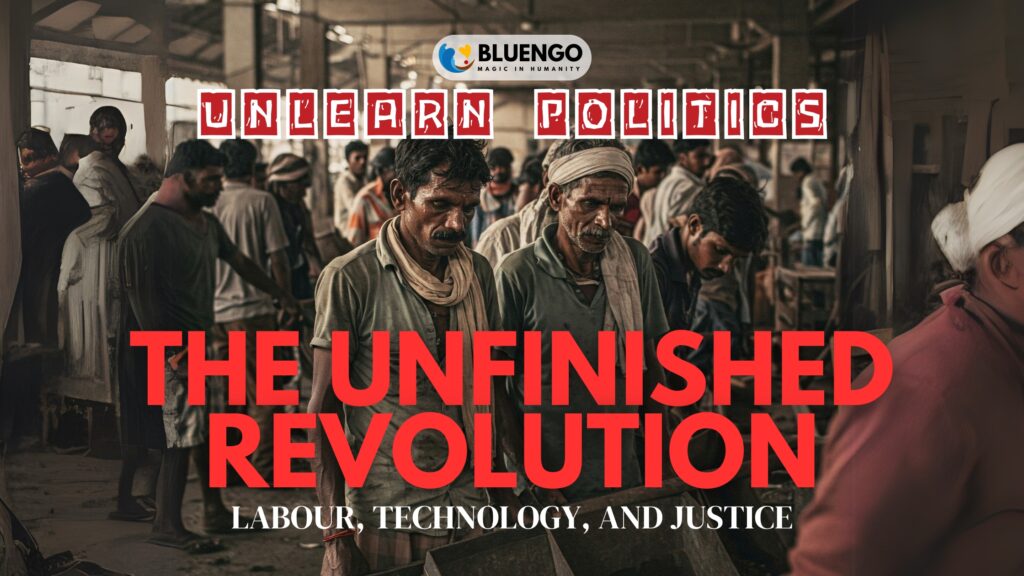
The Unfinished Revolution: Labour, Technology, and Justice
By Zeeshan & Sharukh S
📑 Index
1. Sanitation is Not a Caste Duty: Manual Scavenging in the 21st Century
Author: Zeeshan
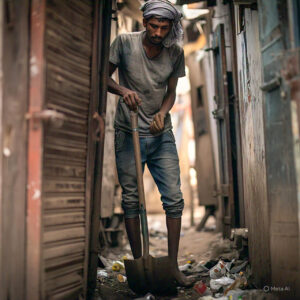
A man picking trash with his bare hands. Loading it into the truck. A woman rag picking. Carrying a huge gunny bag. Workers getting into manholes without any gear, cleaners in open sewers with their shovels, trash collectors with their bins. These are the scenes your likely to encounter if you live in India. Yet most of us are blind to it. They go unnoticed. Their untimely deaths nothing but a statistic.
Despite a ban on Manual Scavenging by the Government in 1993, Every civic entity in India employs them.
Who are they? Where do they come from? What forces reduce them to such work?
They are Dalits. A historically oppressed group deemed untouchable by the self designated Savarnas, who consider it the duty (dharma) of Dalits to work as manual scavengers and sanitation workers. Relying on their dehumanizing work to maintain their idea of casteist purity while subjecting them to ostracization, discrimination, depriving them from access to water, health, education, rights, opportunities, robbing them of a dignified and secure life. All to stay at the top of their caste hegemony.
Due to the accident of their birth, Dalits face indescribable atrocities from inhumane, hazardous working conditions to brutal violence for merely asserting their rights.
Our Prime Minister launched the Swachh Bharat Mission to much grandeur and publicity, the indelible image of him sweeping etched on our collective memories. Despite the goal of improving Waste Management systems of the country, the mission did absolutely nothing about the perils faced by its workers.
The National Commission for Safai Karamcharis a toothless organization appointed by the Government for the improvement of Sanitation Workers reports 1266 deaths of Sanitation Workers. A statistic widely considered to be under reported.
The government has done not even the bare minimum to improve the conditions of these workers. And whatever has been done can only be called Policy Tokenism.
As the media and Government turn them a blind eye. The evidence manifests itself as to how the State and its Pillars are controlled by the powerful minority of Savarnas, who have it in their interest to maintain this hegemony.
We as a country, as a society are a broken and divided one. The next gen same as yesterday’s in their submission to these oppressive systems.
I honestly have no solution for this problem. This devil is the original sin of this land. No other society comes any close to propagating and maintaining such a rigid hierarchy of caste purity. I have no hope for this country. All I have is disappointment.
If the work of the oppressed builds the country, why is their suffering invisible? This Labour Day, we must say it clearly: dignity of labour means ending caste apartheid.
2. Democratising the Digital Space: Why Capitalists Hate Torrent
Author: Sharukh S

Before we dive into why torrents have become such a powerful force and why they’re feared by capitalists. Let’s first understand what a torrent actually is.
Imagine a world where, instead of buying a movie from a single store or subscribing to a streaming service, you gather small pieces of it from thousands of people who already have it. Each person shares a tiny part, and when all those pieces come together, you have the complete movie on your computer. This is the essence of torrenting, a decentralized system where people around the world help each other by sharing files directly, bypassing the need for corporate middlemen or official platforms.
It’s like a community where everyone brings a few bricks, and together, they build a house. No one person owns the house, but together, they make it possible. Torrents are, at their core, a collective effort, a digital collaboration that empowers individuals rather than big corporations.
And this is exactly why capitalism has a problem with torrents. because, instead of a few powerful entities controlling the flow of information, the people control it. In a capitalist world, where profit and ownership dictate access to knowledge and culture, torrents represent a direct challenge to the status quo.
Now, consider a poor family who wants to watch a movie but can’t afford to go to a theater, buy a digital copy, or subscribe to a streaming service. Or think about a college student who needs access to expensive software for their studies, but has no money for it.
In this world, only a select few those who can afford it have access to art, culture, and essential tools. So, we must ask, is it ethical to hoard access to these things and make them available only to those who can pay? Is it fair that the ability to enjoy culture, learn, and grow is reserved for the wealthy few?
Torrents force us to confront these uncomfortable questions. Should access to culture, art, and education be determined by one’s ability to pay? On one hand, torrents offer a chance for everyone, regardless of their financial situation, to enjoy movies, music, software, and more. It’s a world where the value of culture and knowledge isn’t locked behind paywalls or subscription fees.
Think about it, those who can afford a movie ticket or a streaming subscription will still go to the theater or enjoy their content on a premium platform. They won’t miss out on an experience because of a torrent. But for the rest of society, torrents provide an opportunity to experience art and culture that would otherwise be out of reach. This raises a profound ethical question, is it fair that only those with money can access the things that shape our world, the films, books, music, and software that reflect our shared humanity?
If money is the sole factor that determines who gets to experience culture and knowledge, we must ask ourselves, how can society progress in such an unequal world? Knowledge and culture are not luxuries. They are the very tools that foster creativity, innovation, and empathy. In the current capitalist model, access to these tools is commodified, creating a divide between the haves and the have-nots.
But torrents offer a different vision, a vision where access is democratized, where progress is not locked behind a paywall, and where the collective effort of many empowers the individual. Only in a world where culture and knowledge are free to all, we may find that the true potential of human creativity and collaboration is unlocked, not just for the privileged few, but for everyone.
3. Is Clean Energy Really Clean? The Hidden Cost of Lithium Mining
Author: Sharukh S
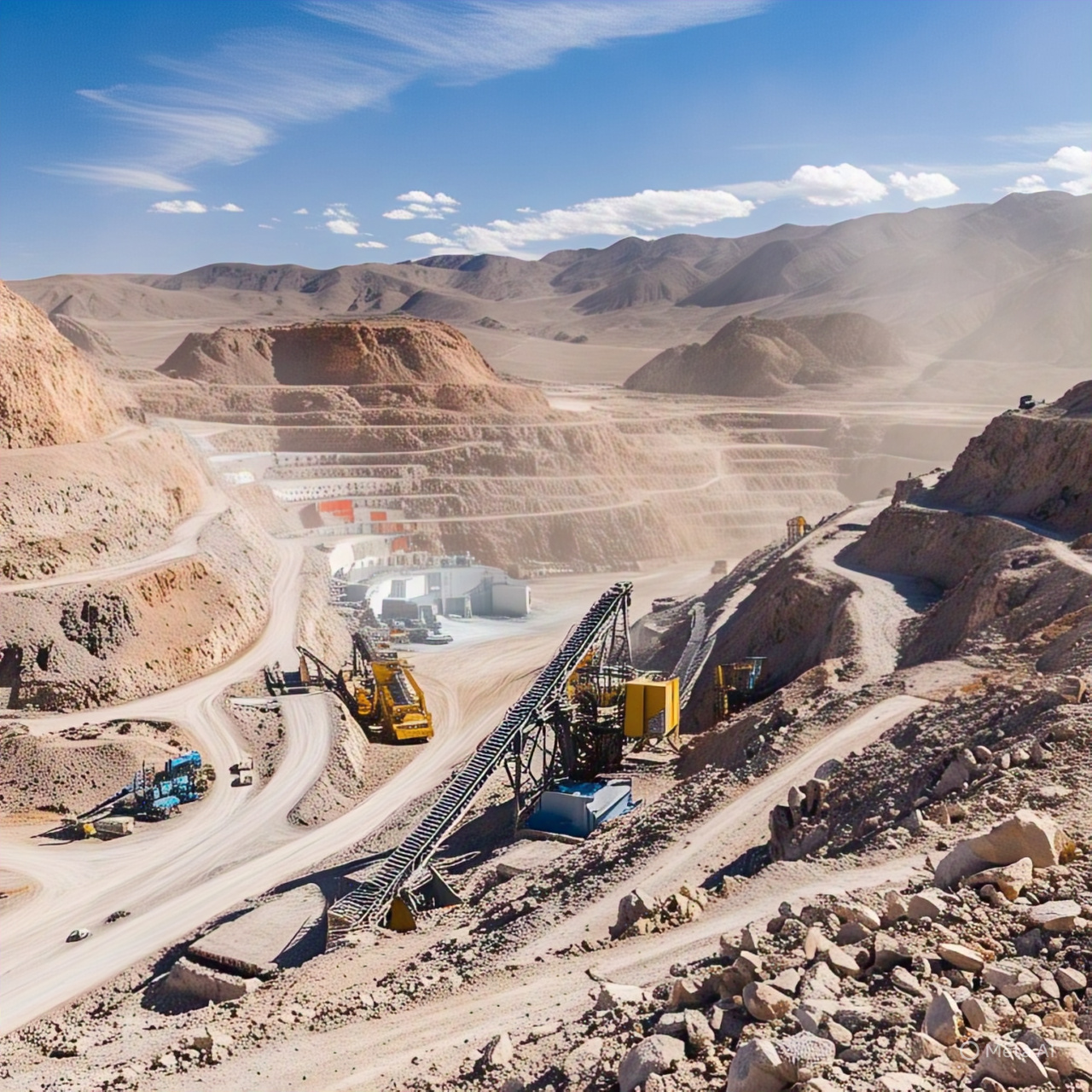
For decades, fossil fuels powered our world and poisoned it. From smog choked cities to oil slicked oceans, the cost has been climate change, illness, and displacement. Everyone agreed: we needed something cleaner.
So when electric vehicles (EVs) arrived, they were hailed as saviors. No emissions, no fuel, just quiet motors powered by progress. In 2025, EVs make up 8% of vehicles globally, even more in cities like Goa. But at the heart of this “clean” energy lies something far more complicated: lithium.
The Demand for Lithium: The New Oil
Lithium powers everything EVs, smartphones, laptops, even renewable energy grids. It’s been dubbed the “white gold” of our time. As fossil fuels decline, lithium is the new oil and a new global race is on.
Environmental Devastation: Not So Green
Extracting lithium consumes massive amounts of water, often from drought prone regions. It contaminates groundwater, ruins farmland and destroys fragile ecosystems. What we call “clean” in one place leaves a toxic footprint in another.
Human Cost: Exploitation and Slavery
In places like the Democratic Republic of Congo, children and adults mine cobalt. another key battery ingredient, in inhumane, unsafe conditions. With no masks or gloves, they breathe in deadly dust, risking illness and injury daily. Many are trapped in modern-day slavery, paid paisas to power the lifestyles of the privileged.
Green for Whom?
Just like fossil fuels, the wealth from lithium flows to multinational corporations, not to the laborers or Indigenous communities whose lands are exploited. Resistance is often met with violence, silenced by profit.
The Global Divide
The self-proclaimed “First World” demands clean energy while the so-called “Third World” pays the price. The Global South is once again made into a sacrifice zone for the comfort of the North.
And here’s the irony. I wrote this article on a lithium powered iPhone. You’re probably reading it on a device built from the sweat, struggle, and stolen childhoods of people halfway across the world. Every meme we scroll past, every video we stream, is powered by the unseen labor of exploited workers, miners with no masks, children in unsafe pits, and communities stripped of their land and water.
Remembering isn’t enough.
We must talk about it. Teach it. Let the truth travel from classrooms to conversations, from memes to movements. Small drops make an ocean and every drop of awareness matters.
Because only when we see the full human cost behind our convenience can we begin to imagine and fight for a cleaner, fairer world. One where clean energy isn’t just green on paper, but just in practice. One where no one has to suffer so the rest of us can plug in.
4. Labour News Snippets – 2025 Highlights
🔴 Caste-Based Violence in Tamil Nadu
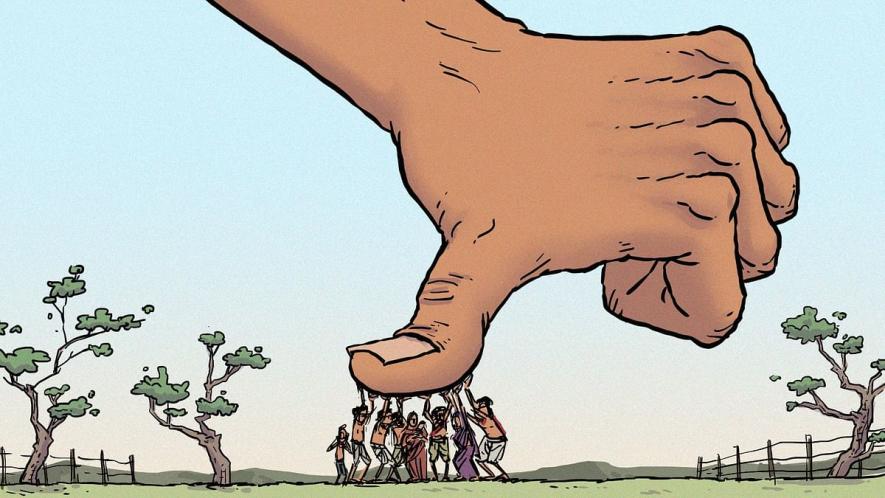
Reports indicate a significant increase in crimes against Dalits in Tamil Nadu. According to India’s National Crime Records Bureau, a crime is committed against a Dalit every 18 minutes, with 27 atrocities reported daily. .
⚠️ Post-Pahalgam Hate Crimes
After the April 22 attack in Pahalgam, Muslims and Kashmiris faced lynching, job loss, and healthcare denial. Posters read: “Dogs and Muslims not allowed.”

In the aftermath of the April 22 militant attack in Pahalgam, a chilling wave of hate crimes and discrimination has erupted across India, targeting Muslims and Kashmiris:
- Murder & Mob Violence: Members of the Kshatriya Gau Raksha Dal lynched a Muslim man and injured his cousin in Uttar Pradesh as “retaliation” for the attack.
- Widespread Assaults: From Chandigarh to Dehradun, Kashmiri students. especially women faced verbal abuse, physical attacks, and eviction threats.
- Workplace & Medical Discrimination: Muslim workers were fired, denied medical care (e.g., in Kolkata), and harassed for refusing to chant Hindu religious slogans.
- Hate Speech & Threats: Posters declaring “Dogs and Muslims not allowed” appeared in West Bengal; Hindu groups openly called for Gaza-style action in Kashmir.
- State Complicity: Security personnel failed to intervene during assaults, while politicians were booked or arrested for questioning the government narrative.
🧑💼 New Labour Code: 4-Day Workweek

India’s New Labour Code 2025 proposes a 4-day workweek, allowing employees to work 12-hour shifts over four days, totaling 48 hours per week. While aiming to provide longer weekends, this change has sparked debates about potential overwork and its impact on workers’ health.
🛵 Gig Workers Demand Rights
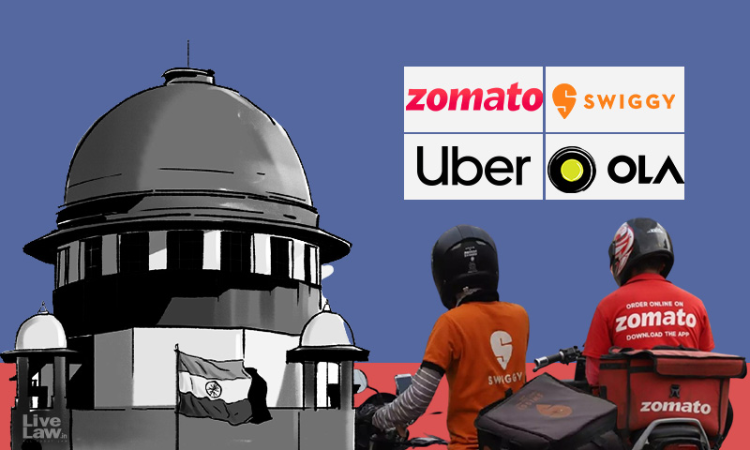
The Indian government is engaging with stakeholders to develop a comprehensive framework providing social security benefits to gig and platform workers. This move aims to address the lack of protections for workers in the rapidly growing gig economy.
🏢 Mass Layoffs Globally

In 2025, companies like UPS (20,000 jobs), Meta (21,000+), and Johns Hopkins University (largest layoffs in its history) have slashed jobs citing automation, restructuring, and budget cuts. Mass layoffs now reflect a shift toward cost-cutting and AI-led efficiency.
🌐 Trade Wars Threaten Jobs
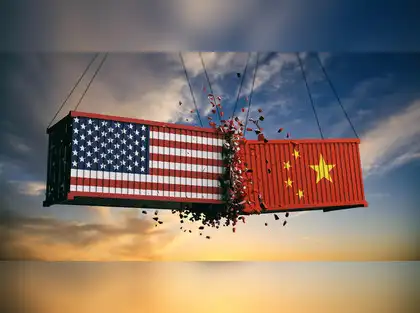
U.S.-China tariffs have triggered a downturn: China’s manufacturing index dropped to 49.0 and global growth forecasts dipped to 2.8%. Export bans and rising costs are putting millions of jobs at risk, especially in manufacturing-heavy economies.
📣 Final Word
From manholes in India to lithium mines in Africa, from torrent downloads to corporate layoffs, the stories may differ — but the theme is the same: labour is under siege.
This May Day, let’s remember:
✊🏽 Dignity of labour means equity, access, and liberation — not just work.
International Labour Day 2026: From Struggle to Strength — A Year That Reshaped Workers’ Lives (May 2025 – May 2026)
Index
1.Origin and Historical Background of Labour Day
2.Why May 1 is Celebrated Worldwide
3.Global Labour Trends (May 2025 – May 2026)
4.Economic Slowdowns and Trade Conflicts
5.Technology and the Changing Nature of Work
6.Labour Rights Movements and Policy Changes
7.Labour Conditions in Developing Countries
8. Social Inequality and Discrimination in Labour
9.The Future of Work
10.Final words
1. Origin and Historical Background of Labour Day
International Labour Day traces its roots back to the late 19th century, a time when workers across industries faced long hours, low wages, and unsafe conditions. The demand for an eight-hour workday became a powerful movement.
A defining moment in this struggle was the Haymarket Affair in Chicago. On May 1, 1886, thousands of workers went on strike, demanding fair working hours. What began as a peaceful protest turned tragic after a bomb explosion during a rally, leading to violence and loss of lives. This event became a global symbol of workers’ resistance and sacrifice.
In 1889, the Second International officially declared May 1 as International Workers’ Day. Since then, it has been observed worldwide to honor the contributions and struggles of workers.
2. Why May 1 is Celebrated Worldwide
May 1 stands as a reminder of unity and justice. It is not just a holiday, but a movement that continues to inspire workers globally.
It is celebrated to:
- Recognize the dignity of labour
- Promote fair wages and working conditions
- Strengthen workers’ rights and protections
- Raise awareness about ongoing labour issues
Countries like India observe it with rallies, campaigns, and public discussions, reflecting the importance of labour in nation-building.
3. Global Labour Trends (May 2025 – May 2026)
The past year has been a period of uncertainty and transformation. The global labour market has faced economic pressure, shifting employment patterns, and rising competition.
The global growth rate dropped to around 2.8%, indicating slower economic expansion. Industries that depend heavily on exports and manufacturing experienced reduced demand, leading to fewer job opportunities.
At the same time, there has been a noticeable shift toward informal and gig-based work. Many workers have adapted by taking flexible jobs, though these often lack job security and benefits.
4. Economic Slowdowns and Trade Conflicts
Trade tensions between major economies like United States and China have had widespread effects on workers worldwide.
Key impacts include:
- Increased tariffs raising production costs
- Decline in manufacturing activities
- Disruptions in global supply chains
For example, China’s manufacturing index dropped below 50, signaling contraction. This has led to layoffs and uncertainty, especially in export-driven industries.
Workers in sectors such as textiles, electronics, and logistics have been among the hardest hit, facing wage cuts and reduced job stability.
5. Technology and the Changing Nature of Work
Technology continues to reshape the world of work at an unprecedented pace. Artificial intelligence, automation, and digital platforms are redefining traditional employment.
Major changes include:
- Automation replacing repetitive jobs
- Growth of remote and hybrid work
- Expansion of digital and gig economy jobs
While technology creates new opportunities, it also demands new skills. Workers must continuously upgrade their knowledge to remain competitive.
This shift highlights the importance of adaptability in today’s workforce.
6. Labour Rights Movements and Policy Changes
Despite challenges, workers across the globe have actively raised their voices for better conditions. Labour movements have gained momentum, pushing for reforms.
- Important developments include:
- Increase in minimum wage policies
- Recognition of gig workers’ rights
- Improved workplace safety laws
The International Labour Organization has played a significant role in promoting fair labour standards and encouraging governments to adopt worker-friendly policies.
7. Labour Conditions in Developing Countries
In developing nations like India, the labour landscape reflects both growth and inequality.
Positive trends:
- Expansion of digital and service sectors
- Government skill development initiatives
- Rising entrepreneurial opportunities
Ongoing challenges:
- Large informal workforce
- Limited access to social security
- Wage disparities
Migrant workers and daily wage earners remain vulnerable, especially during economic downturns.
8. Social Inequality and Discrimination in Labour
While economic challenges often dominate discussions on labour, social inequality remains one of the most deeply rooted issues affecting workers, especially in developing societies like India.
Even today, many workers do not experience equal treatment due to factors beyond their skills or performance.
Key forms of discrimination include:
Caste-Based Discrimination:
In some sectors, workers from marginalized communities are still confined to low-paying, unsafe, or stigmatized jobs. This limits upward mobility and reinforces long-standing social hierarchies.
Religious Discrimination:
Bias based on religion can influence hiring decisions, workplace behavior, and promotion opportunities, creating an unequal environment for affected individuals.
Gender Inequality:
Women workers often face wage gaps, fewer leadership opportunities, and unsafe working conditions. In many cases, their work is undervalued or unrecognized.
Migrant Worker Exploitation:
Migrant labourers frequently deal with poor living conditions, delayed wages, and lack of legal protection, making them highly vulnerable.
Lack of Awareness and Enforcement:
Although laws exist to prevent discrimination, weak implementation and lack of awareness allow such practices to continue.
These issues highlight that labour rights are not only about employment, but also about dignity, equality, and human rights.
Addressing these inequalities is essential for building a truly fair and inclusive workforce.
9. The Future of Work
The future of labour will be shaped by innovation, resilience, and inclusivity. Workers will need to focus on:
- Continuous skill development
- Digital awareness
- Career flexibility
At the same time, governments and organizations must ensure fair opportunities and protect workers from exploitation.
The idea of a “job” is evolving into a more dynamic and flexible concept, where adaptability becomes the key to success.
10. Final Word
From the sacrifices remembered in the Haymarket Affair to the challenges of modern globalization, International Labour Day is more than a celebration—it is a reflection.
The year from May 2025 to May 2026 has shown us a clear truth: workers remain at the heart of every economy, yet they continue to face uncertainty in a rapidly changing world.
Economic slowdowns, technological disruption, and global tensions have tested the strength of workers everywhere. But at the same time, resilience, unity, and the fight for rights have grown stronger.
Labour Day reminds us that progress is never permanent—it must be protected and strengthened continuously.
As we step into the future, one message stands clear:
A nation’s true strength lies not in its wealth, but in the dignity, security, and empowerment of its workers.