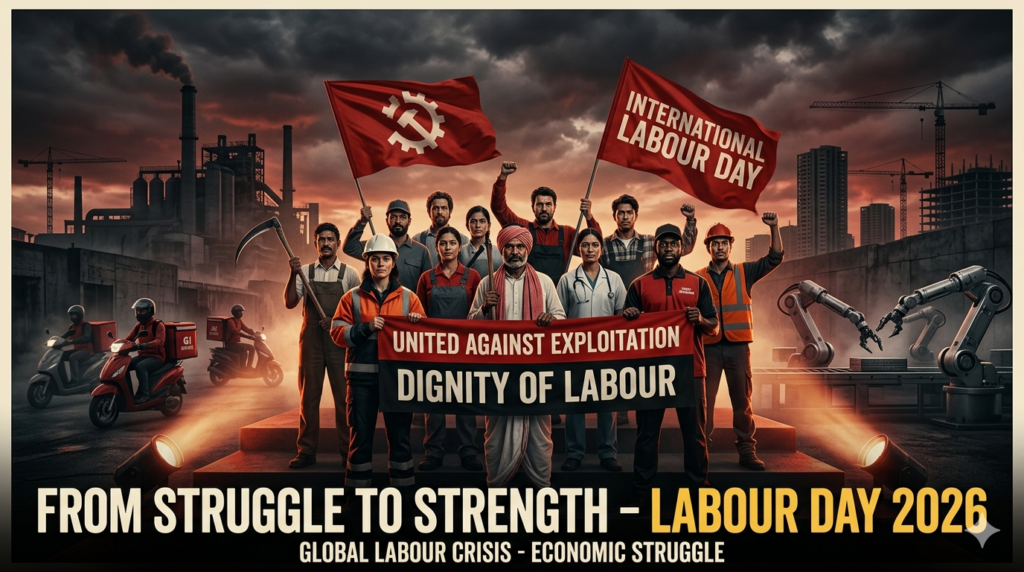
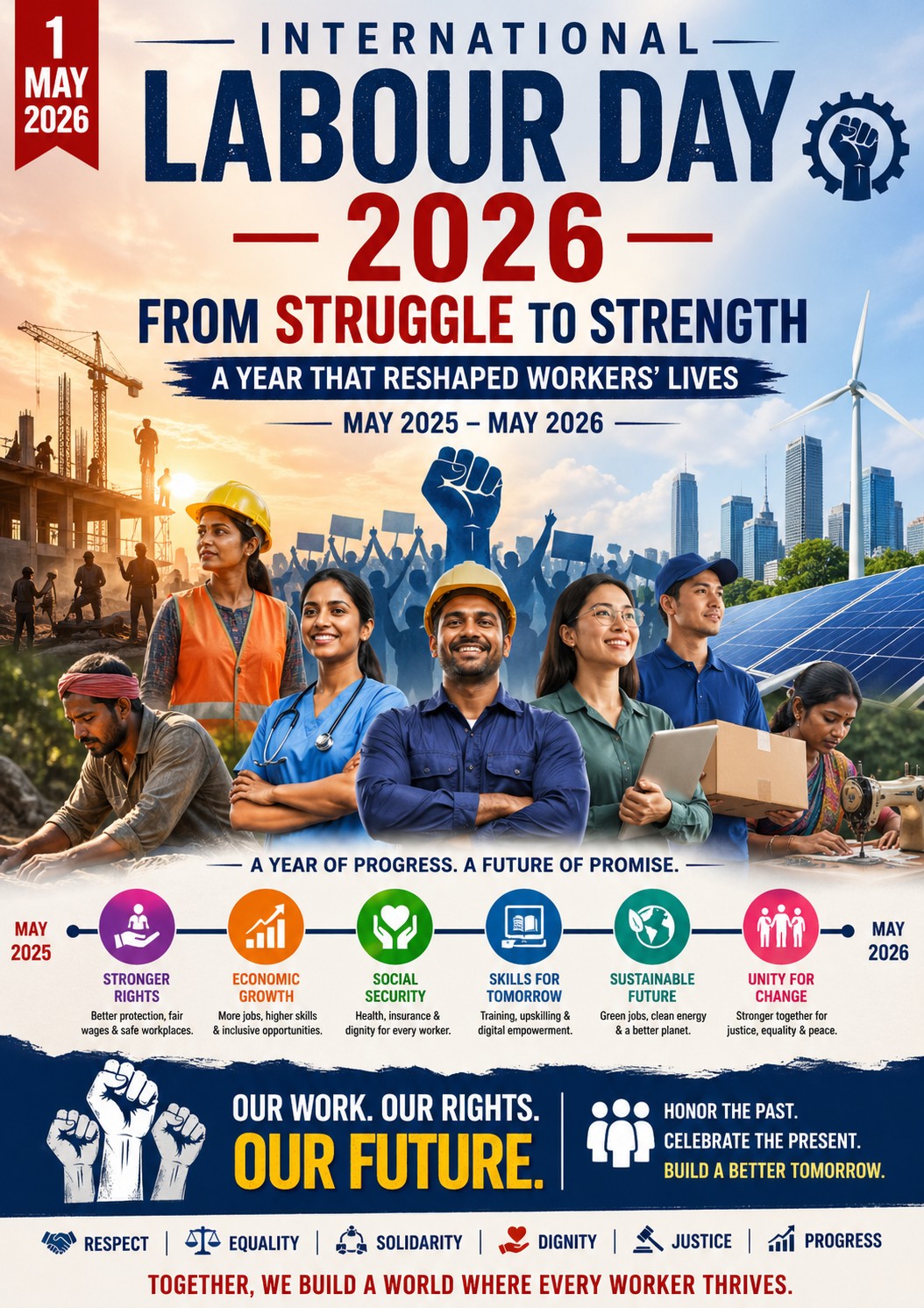
🌍 International Labour Day 2026: From Struggle to Strength — A Year That Reshaped Workers’ Lives(May 2025 – May 2026)
Prepared by Felix, Intern, BLUE NGO
📑 Index
- Origin and Historical Background of Labour Day
- Why May 1 is Celebrated Worldwide
- Global Labour Trends (May 2025 – May 2026)
- Economic Slowdowns and Trade Conflicts
- Technology and the Changing Nature of Work
- Labour Rights Movements and Policy Changes
- Labour Conditions in Developing Countries
- Social Inequality and Discrimination in Labour
- The Future of Work
- Final Word
1. Origin and Historical Background of Labour Day
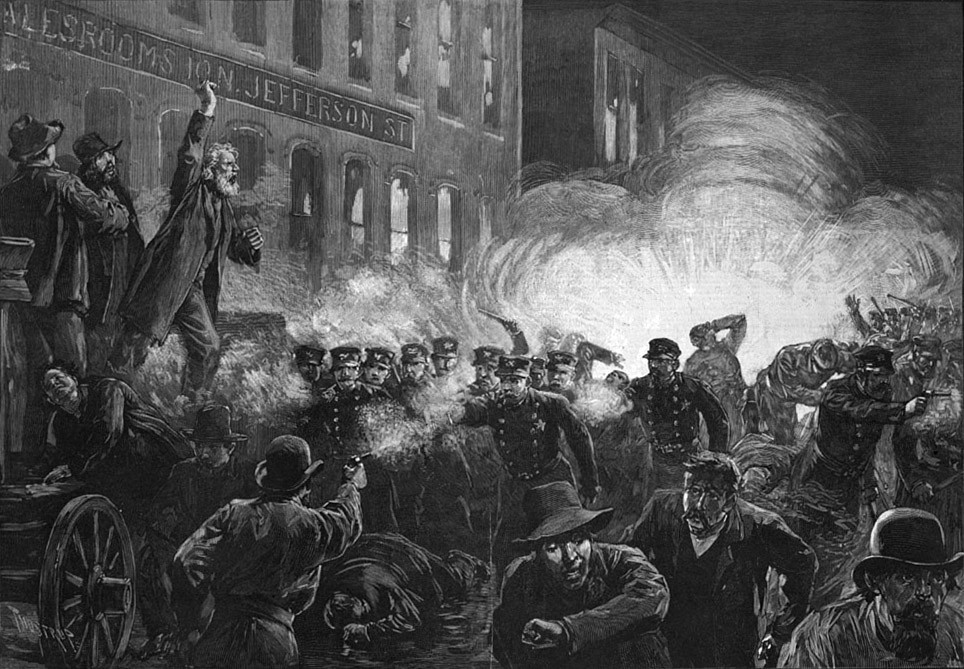
International Labour Day traces its roots back to the late 19th century, a time when workers across industries faced long hours, low wages, and unsafe conditions. The demand for an eight-hour workday became a powerful movement.
A defining moment in this struggle was the Haymarket Affair in Chicago. On May 1, 1886, thousands of workers went on strike, demanding fair working hours. What began as a peaceful protest turned tragic after a bomb explosion during a rally, leading to violence and loss of lives. This event became a global symbol of workers’ resistance and sacrifice.
In 1889, the Second International officially declared May 1 as International Workers’ Day. Since then, it has been observed worldwide to honor the contributions and struggles of workers.
2. Why May 1 is Celebrated Worldwide
May 1 stands as a reminder of unity and justice. It is not just a holiday, but a movement that continues to inspire workers globally.
It is celebrated to:
- Recognize the dignity of labour
- Promote fair wages and working conditions
- Strengthen workers’ rights and protections
- Raise awareness about ongoing labour issues
Countries like India observe it with rallies, campaigns, and public discussions, reflecting the importance of labour in nation-building.
3. Global Labour Trends (May 2025 – May 2026)
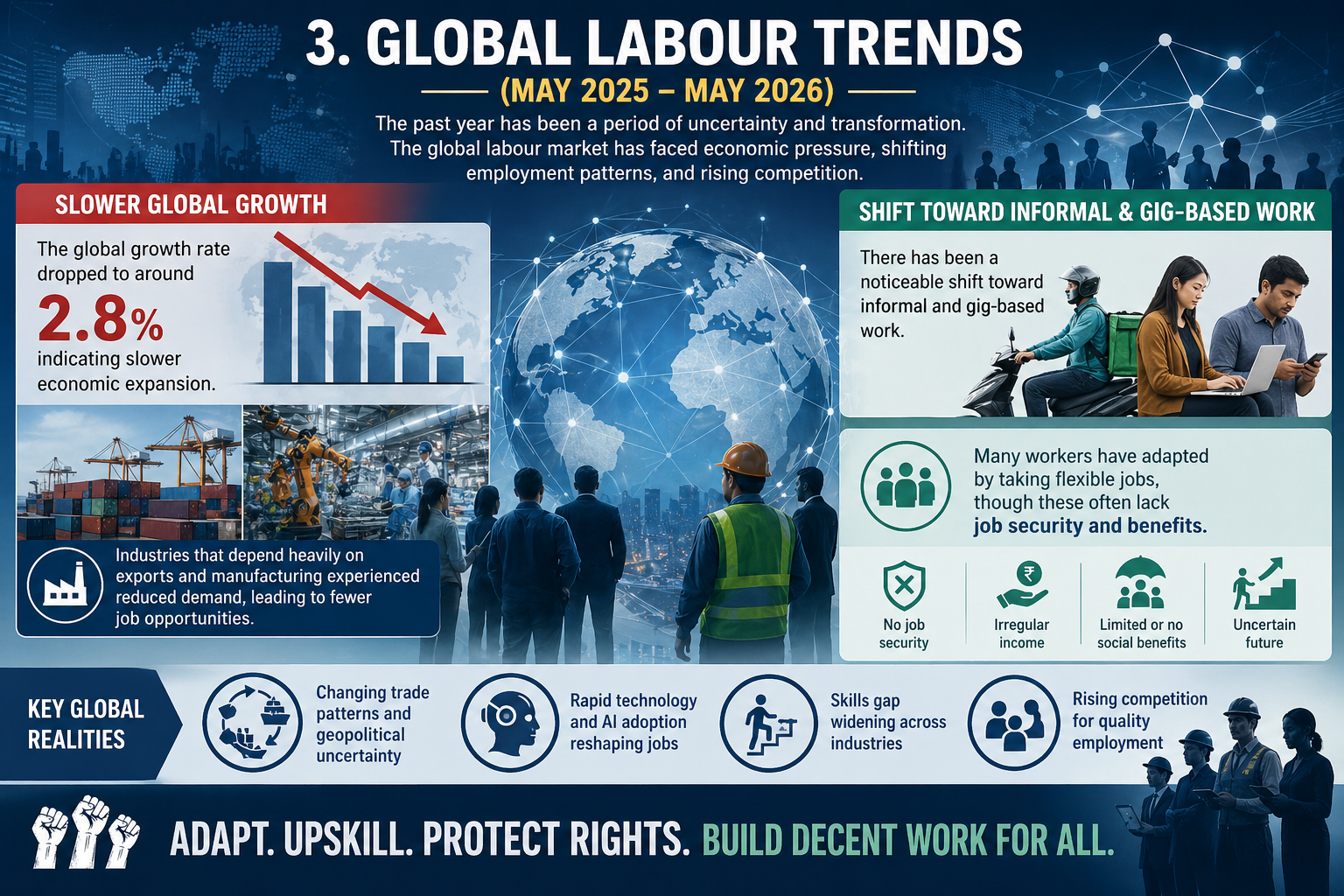
The past year has been a period of uncertainty and transformation. The global labour market has faced economic pressure, shifting employment patterns, and rising competition.
The global growth rate dropped to around 2.8%, indicating slower economic expansion. Industries that depend heavily on exports and manufacturing experienced reduced demand, leading to fewer job opportunities.
At the same time, there has been a noticeable shift toward informal and gig-based work. Many workers have adapted by taking flexible jobs, though these often lack job security and benefits.
4. Economic Slowdowns and Trade Conflicts
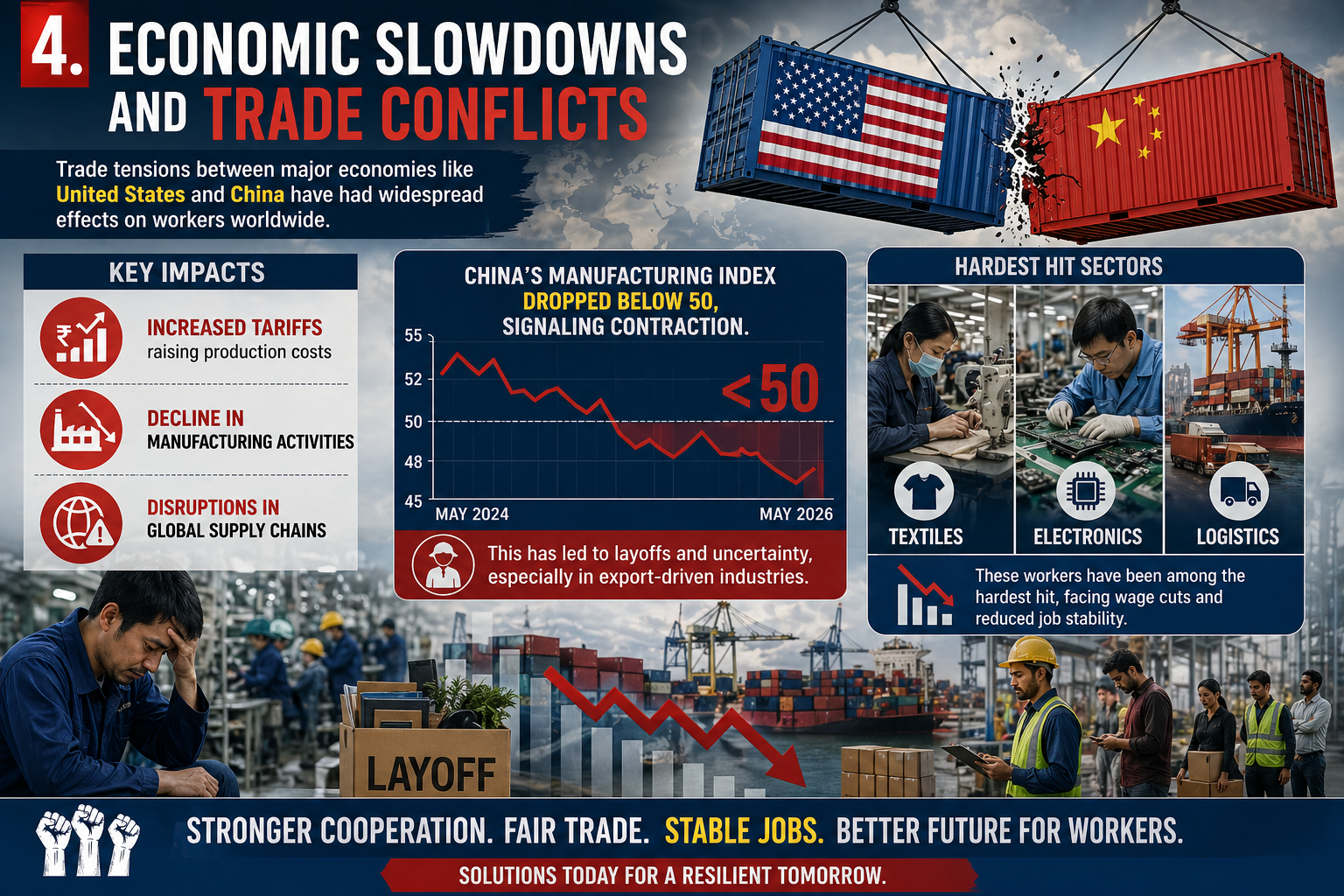
Trade tensions between major economies like United States and China have had widespread effects on workers worldwide.
- Increased tariffs raising production costs
- Decline in manufacturing activities
- Disruptions in global supply chains
For example, China’s manufacturing index dropped below 50, signaling contraction. This has led to layoffs and uncertainty, especially in export-driven industries. Workers in sectors such as textiles, electronics, and logistics have been among the hardest hit, facing wage cuts and reduced job stability.
5. Technology and the Changing Nature of Work
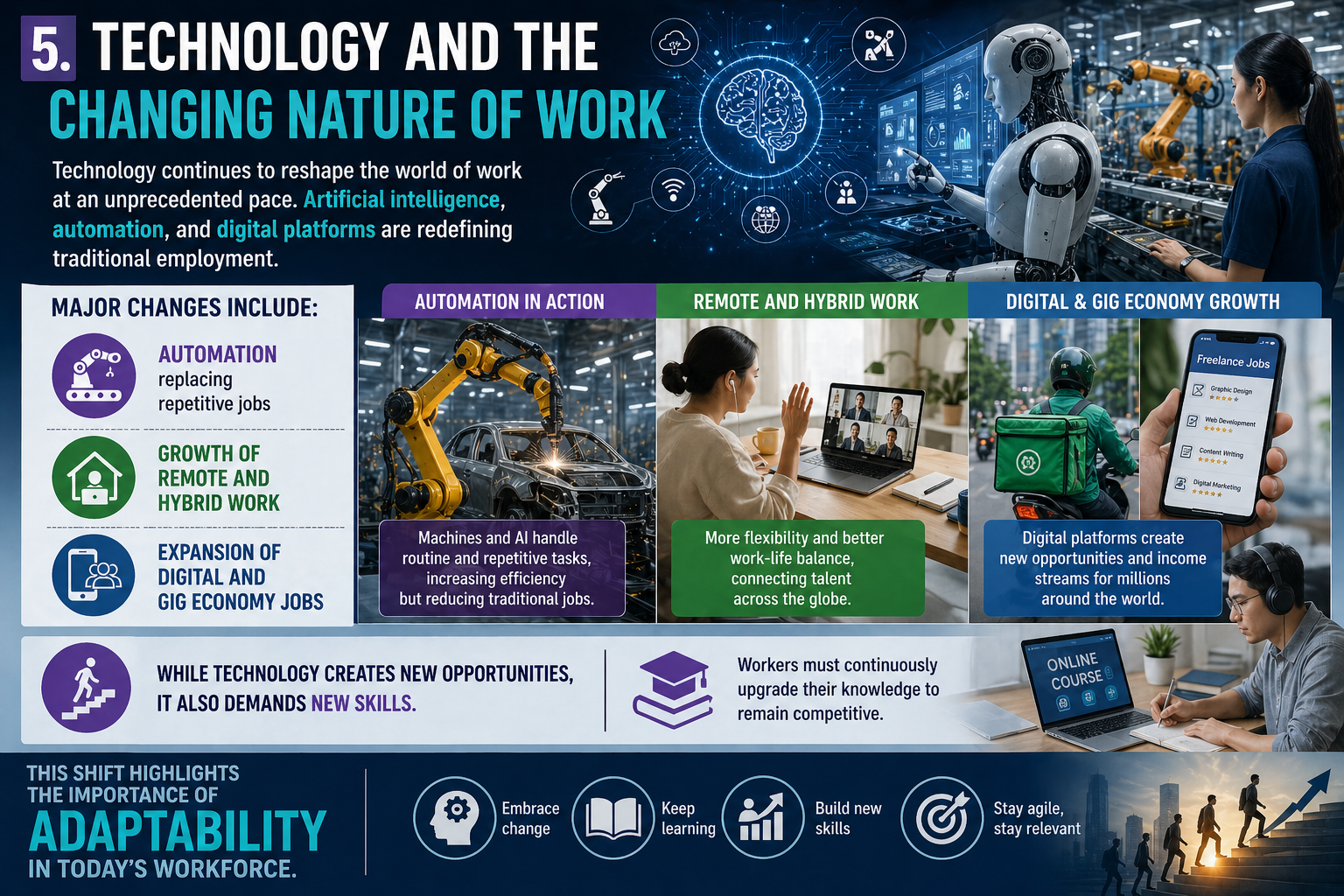
Technology continues to reshape the world of work at an unprecedented pace. Artificial intelligence, automation, and digital platforms are redefining traditional employment.
- Automation replacing repetitive jobs
- Growth of remote and hybrid work
- Expansion of digital and gig economy jobs
While technology creates new opportunities, it also demands new skills. Workers must continuously upgrade their knowledge to remain competitive.
This shift highlights the importance of adaptability in today’s workforce.
6. Labour Rights Movements and Policy Changes
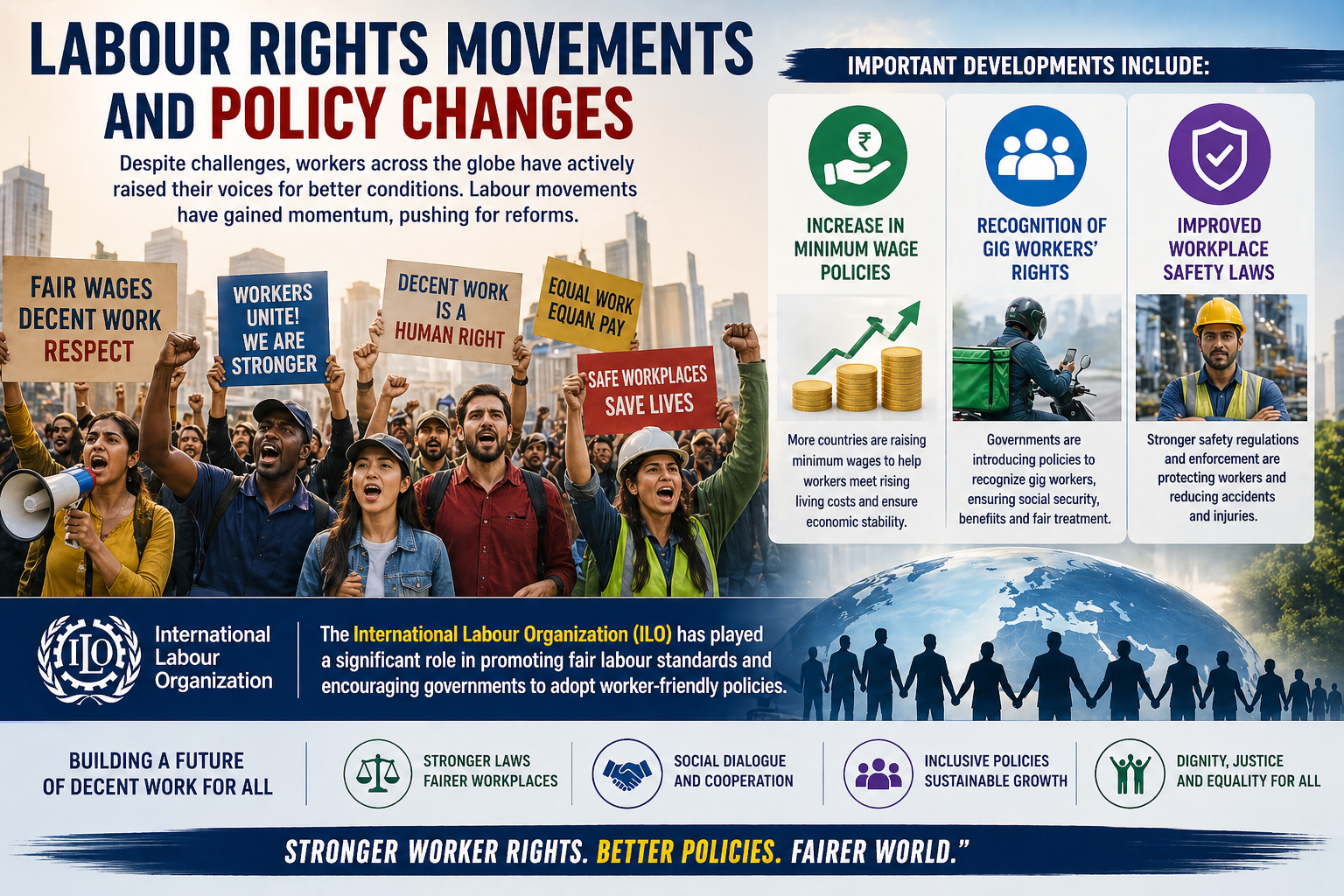
Despite challenges, workers across the globe have actively raised their voices for better conditions. Labour movements have gained momentum, pushing for reforms.
- Increase in minimum wage policies
- Recognition of gig workers’ rights
- Improved workplace safety laws
The International Labour Organization has played a significant role in promoting fair labour standards and encouraging governments to adopt worker-friendly policies.
7. Labour Conditions in Developing Countries
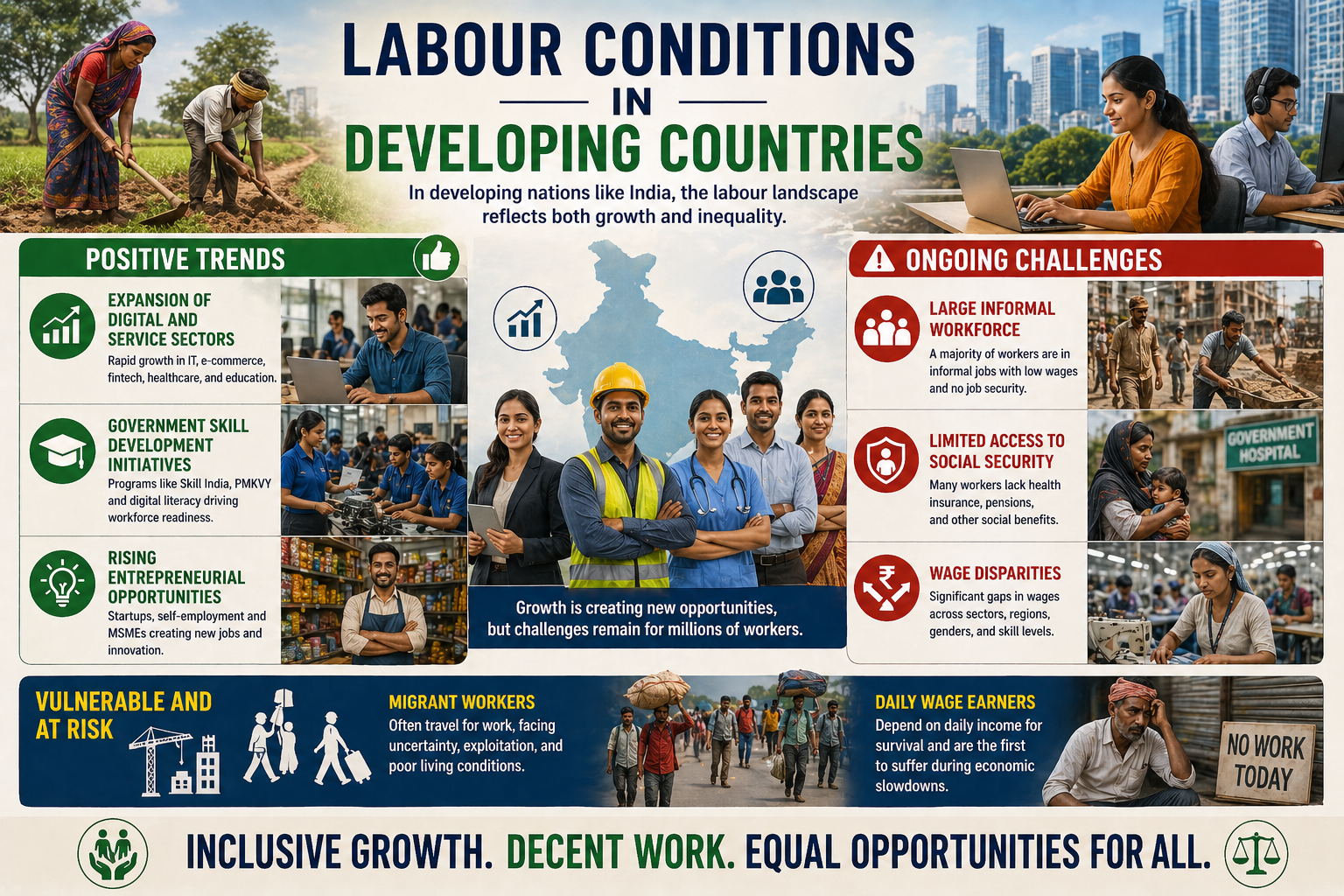
In developing nations like India, the labour landscape reflects both growth and inequality.
Positive trends:
- Expansion of digital and service sectors
- Government skill development initiatives
- Rising entrepreneurial opportunities
Ongoing challenges:
- Large informal workforce
- Limited access to social security
- Wage disparities
Migrant workers and daily wage earners remain vulnerable, especially during economic downturns.
8. Social Inequality and Discrimination in Labour
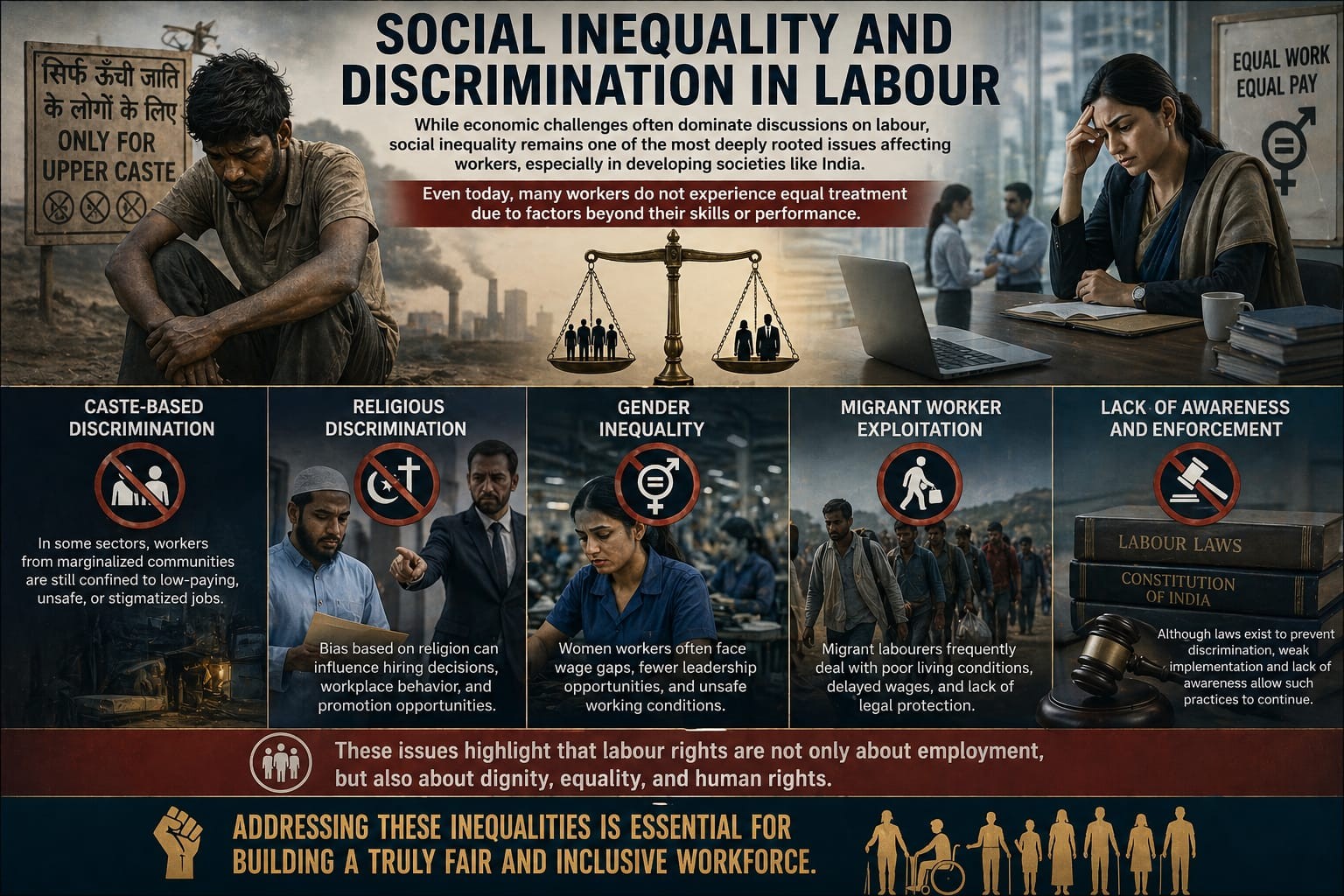
While economic challenges often dominate discussions on labour, social inequality remains one of the most deeply rooted issues affecting workers, especially in developing societies like India.
Even today, many workers do not experience equal treatment due to factors beyond their skills or performance.
- Caste-Based Discrimination: Workers from marginalized communities are often confined to unsafe or stigmatized jobs.
- Religious Discrimination: Bias can influence hiring, promotions, and workplace behavior.
- Gender Inequality: Women face wage gaps, limited leadership opportunities, and unsafe workplaces.
- Migrant Worker Exploitation: Poor living conditions, delayed wages, and lack of legal protections remain common.
- Lack of Enforcement: Existing anti-discrimination laws are often weakly implemented.
These issues highlight that labour rights are not only about employment, but also about dignity, equality, and human rights.
9. The Future of Work
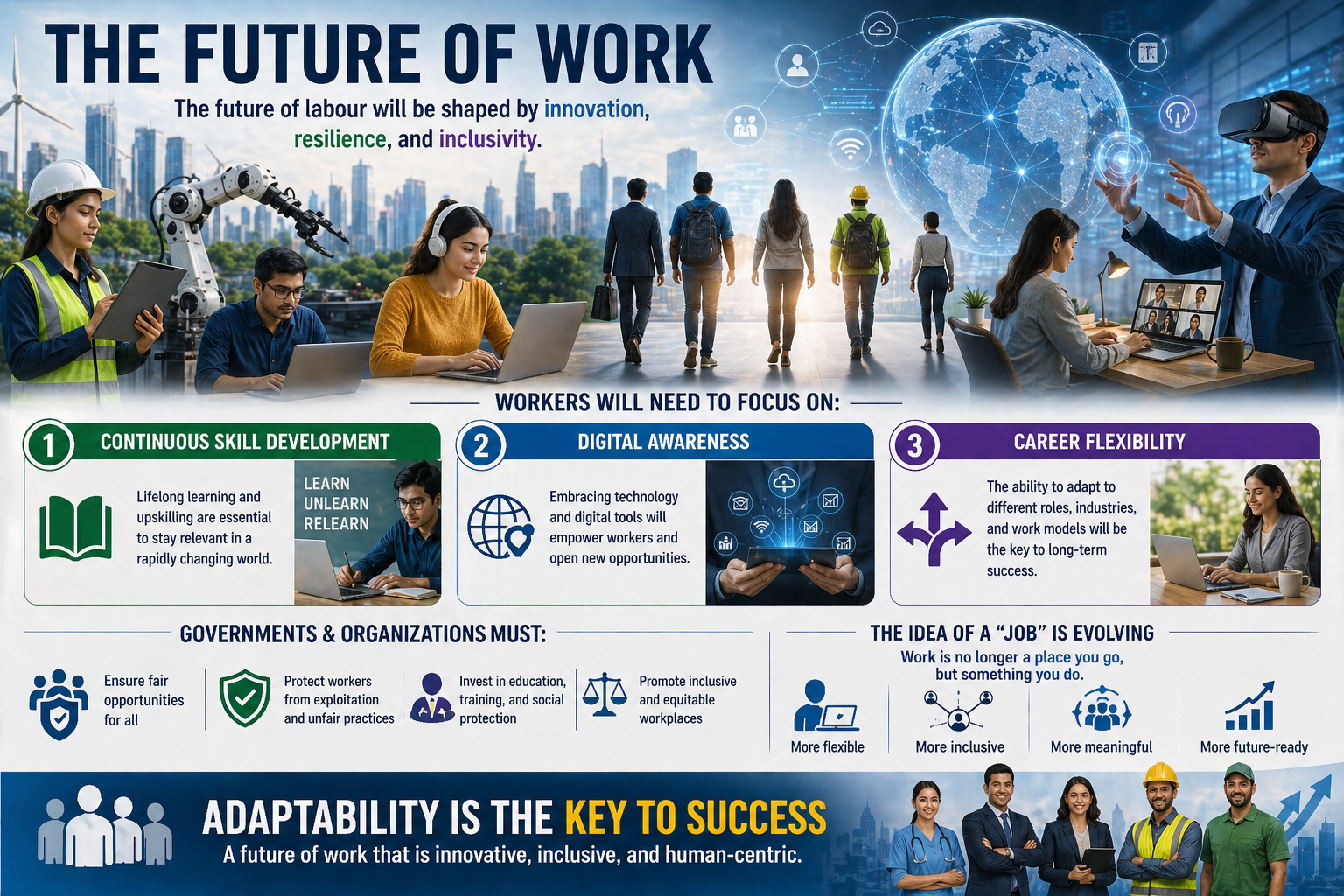
The future of labour will be shaped by innovation, resilience, and inclusivity. Workers will need to focus on:
- Continuous skill development
- Digital awareness
- Career flexibility
At the same time, governments and organizations must ensure fair opportunities and protect workers from exploitation.
The idea of a “job” is evolving into a more dynamic and flexible concept, where adaptability becomes the key to success.
10. Final Word
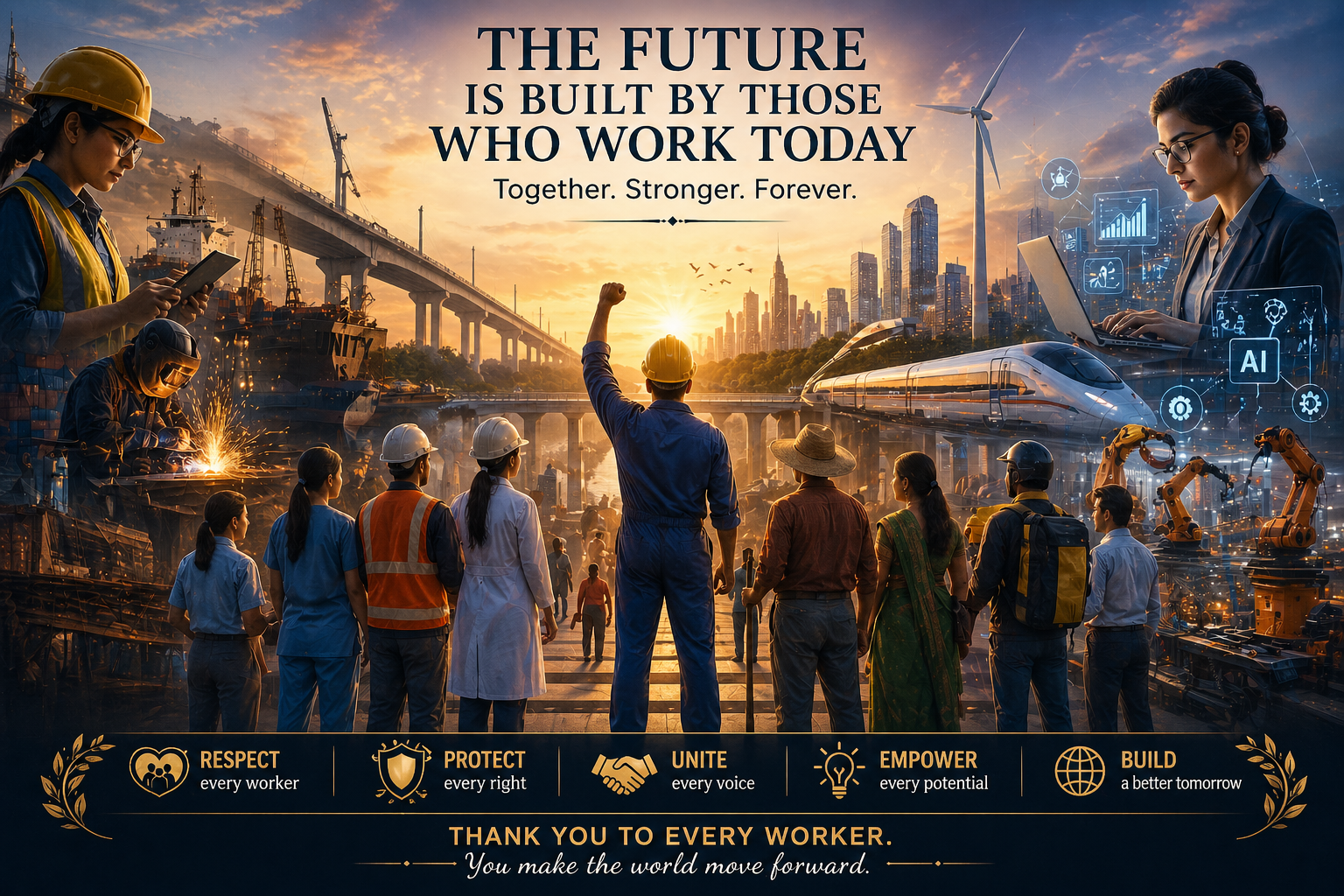
From the sacrifices remembered in the Haymarket Affair to the challenges of modern globalization, International Labour Day is more than a celebration—it is a reflection.
The year from May 2025 to May 2026 has shown us a clear truth: workers remain at the heart of every economy, yet they continue to face uncertainty in a rapidly changing world.
Economic slowdowns, technological disruption, and global tensions have tested the strength of workers everywhere. But at the same time, resilience, unity, and the fight for rights have grown stronger.
Labour Day reminds us that progress is never permanent—it must be protected and strengthened continuously.
As we step into the future, one message stands clear:
A nation’s true strength lies not in its wealth, but in the dignity, security, and empowerment of its workers.